A certified kettlebell specialist uses these three moves to build a strong, powerful core
Don't worry, this ab workout is crunch-free


When I say core workout, your mind may immediately jump to crunches and scissor kicks, but these aren’t your only—or even best—options.
“True core strength goes far beyond a visible six-pack; it is the foundation of total-body stability, spinal protection and powerful movement,” says Faith Ellis, a level three certified kettlebell specialist and the founder of women’s kettlebell training app and community, The KettleBelle.
Rather than hammering out hundreds of crunches, Ellis recommends incorporating a kettlebell.
“I have been teaching kettlebell mechanics for more than four years, and they are hands down my favorite tool for building an ironclad, functional core,” she says.
“They are inherently asymmetrical and dynamic. Unlike dumbbells, a kettlebell’s center of mass is displaced from its handle.
“This forces your deep stabilizing muscles, like the transverse abdominis and obliques, to fire constantly just to keep your body balanced.
“Every kettlebell movement is an active core movement.”
Ellis recommends the following three moves for a powerful core workout that will challenge your strength and stability.
Kettlebell core workout
- Plank kettlebell drag: 3 x 10-12 each side
- Kettlebell halo: 3 x 8-10 each direction
- Kettlebell snatch: 3-4 x 6-8 each side
Use the moves in a workout as below, read on for how to do each kettlebell exercise with good form.
1. Plank kettlebell drag
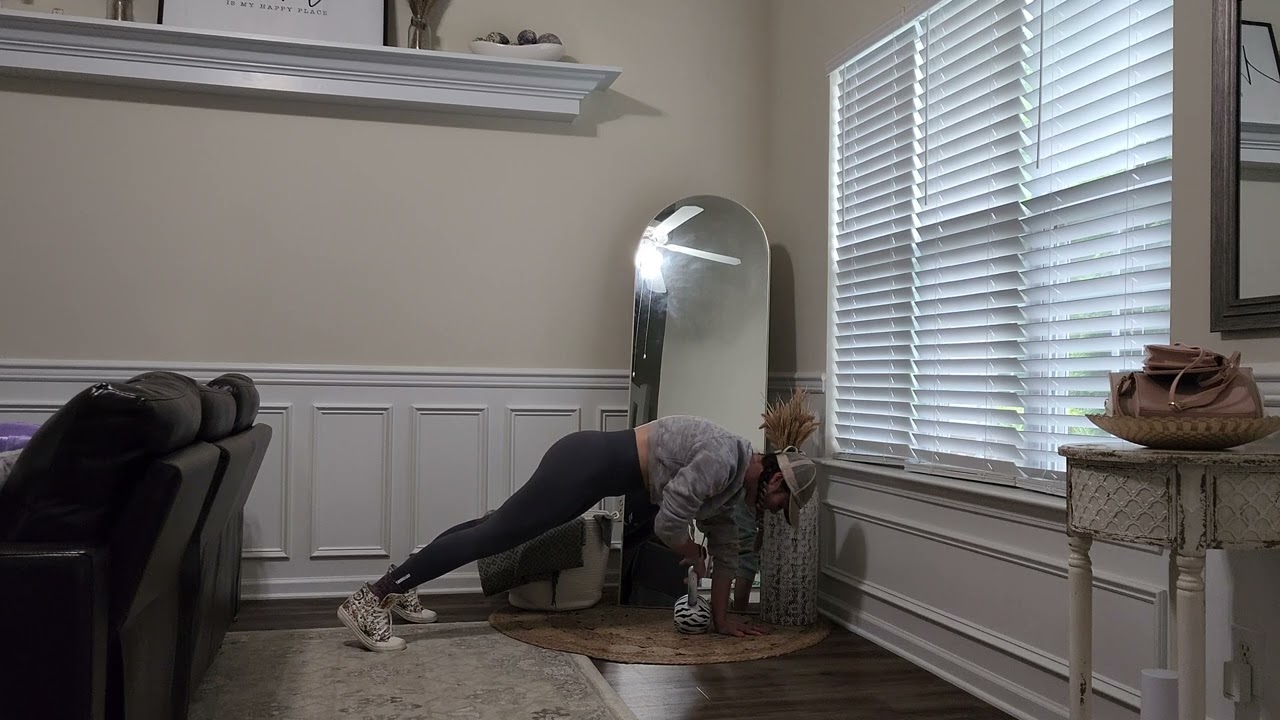
Sets: 3 Reps: 10-12 each side
How to do it:
- Begin in a high-plank position on your hands and toes and your body in a straight line from head to heels and a kettlebell on the floor just behind your left wrist.
- Ensure your shoulders are directly over your wrists, your feet are hip-width apart for a stable base, and your core, glutes and quads are tightly engaged.
- Reach underneath your body with your right hand, grasp the kettlebell handle and pull it across the floor to the right side, placing it just behind where your right wrist was.
- Keep your hips completely square to the floor, without rocking or tilting as you move the weight.
- Return your right hand to the floor.
- Repeat on the other side.
- Continue, alternating sides with each rep.
Ellis says: “This is the ultimate anti-rotation exercise. While it looks like an arm movement, your core is working overtime to prevent your hips from shifting,” says Ellis.
“It forces deep core activation and teaches you trunk stability.”
2. Kettlebell halo
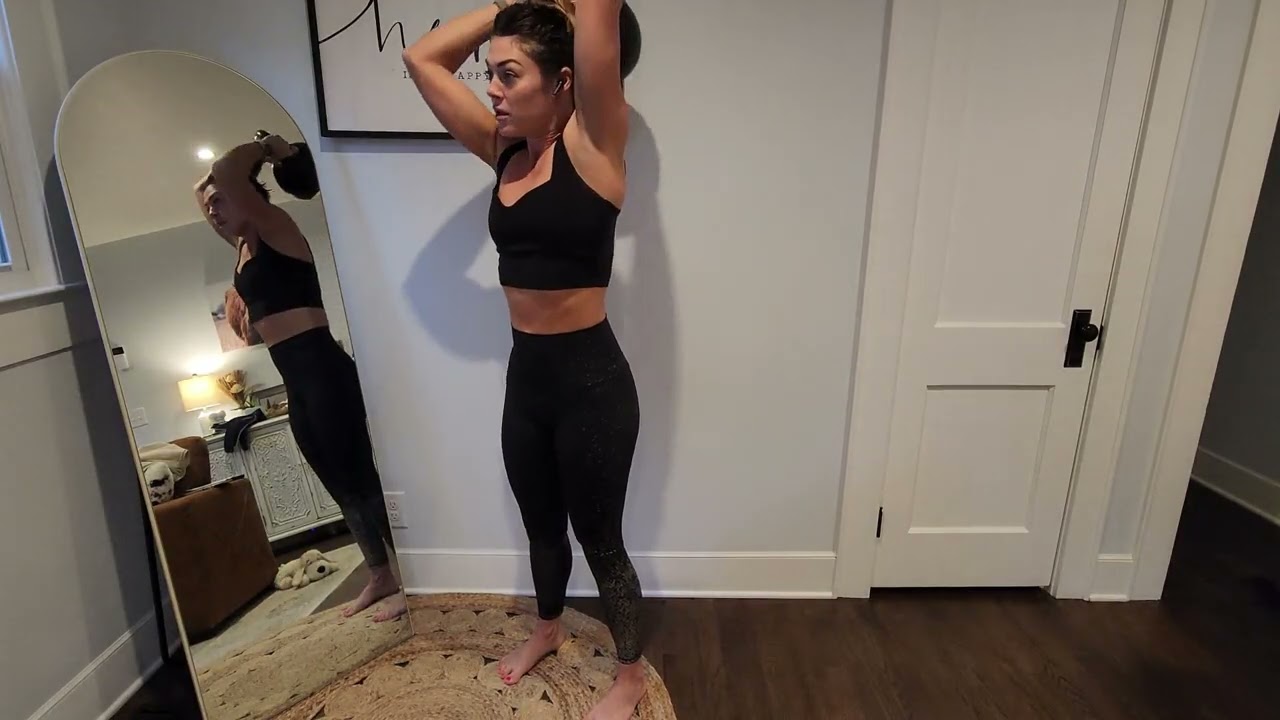
Sets: 3 Reps: 8-10 each direction
How to do it:
- Stand with your feet hip-width apart and your back straight, holding the kettlebell upside down by the sides of the handle in front of your chest.
- Tuck your pelvis slightly to engage your lower abs and pull your shoulders down and away from your ears.
- Bring the bottom of the kettlebell over your left shoulder, dip it behind the nape of your neck, bring it around, over your right shoulder and return it to the starting position in front of your chest.
- You can alternate directions for each rep or complete all reps in one direction before switching.
Form tips:
- Keep the kettlebell as close to your neck as possible, like a collar.
- Do not move your head to dodge the kettlebell; keep your head and torso perfectly still and let your core brace against the moving weight.
Ellis says: “The kettlebell halo is a phenomenal dynamic stability movement. As the weight moves around your head, your center of gravity constantly shifts.
“Your core has to react in real time to keep your torso perfectly upright, which beautifully carves out the obliques.”
3. Kettlebell snatch
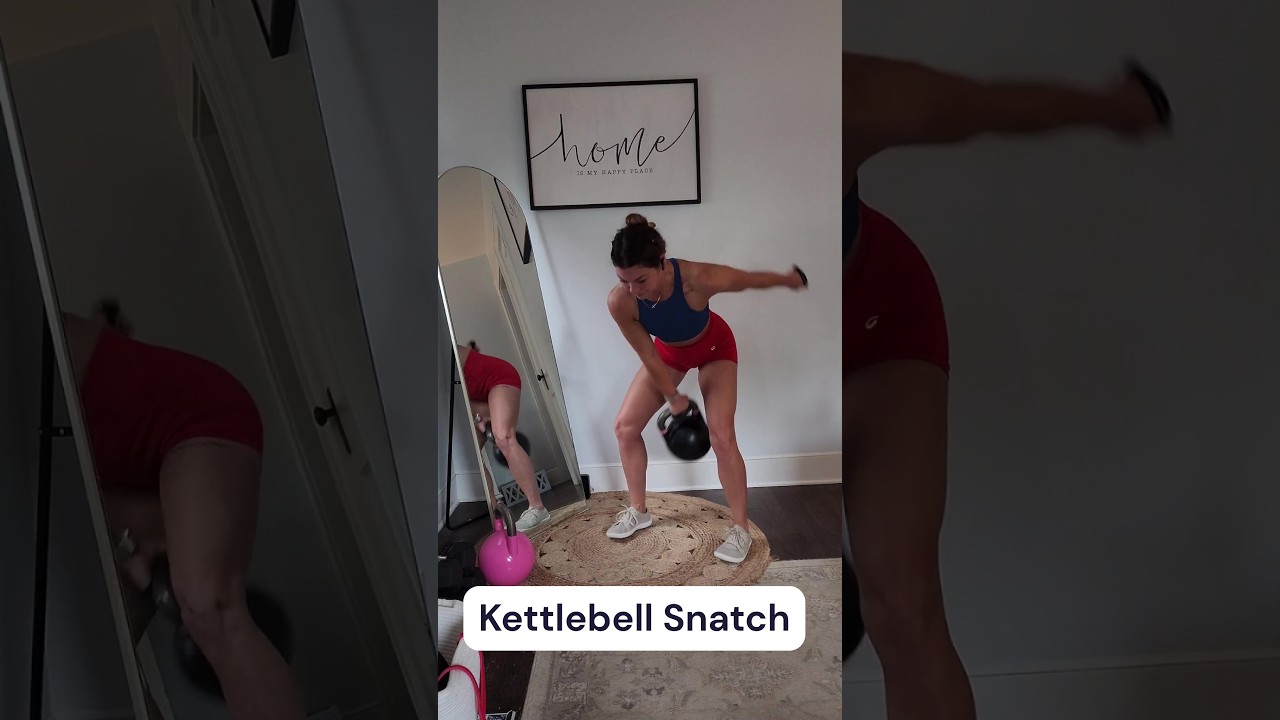
Sets: 3-4 Reps: 6-8 each side
How to do it:
- Stand over the kettlebell with your feet slightly wider than shoulder-width apart.
- Hinge at your hips and push your butt back, keeping your back straight.
- Grasp the kettlebell handle with one hand, tilting the kettlebell toward you.
- Engage your core.
- Pull the kettlebell between your legs, then push your hips forward to snap upright, raising the kettlebell close to your body.
- As the kettlebell reaches chest height, punch your hand up, rotating the kettlebell smoothly around your wrist.
- Brace your core tightly at the top of the movement.
- Carefully reverse the movements to lower the kettlebell back into the hip hinge to smoothly transition into the next rep.
Form tips:
- The power comes from your hips and a strong core brace, not your arm. Think of your core as the brakes that stabilize the explosive energy at the top of the movement.
- Punch up powerfully when lifting the kettlebell overhead to avoid slapping your forearm.
Ellis says: “This is an advanced, explosive, full-body power movement.
“The kettlebell travels from the floor all the way overhead in one fluid motion, so it requires maximum deceleration at the top.
“I love it because it forces the entire abdominal cavity to stabilize to catch the weight safely overhead.”

Faith Ellis is a certified kettlebell specialist and the founder of The KettleBelle, a fitness app and community designed to empower women through functional strength and kettlebell training. She focuses on biomechanics, core stability and sustainable strength.
